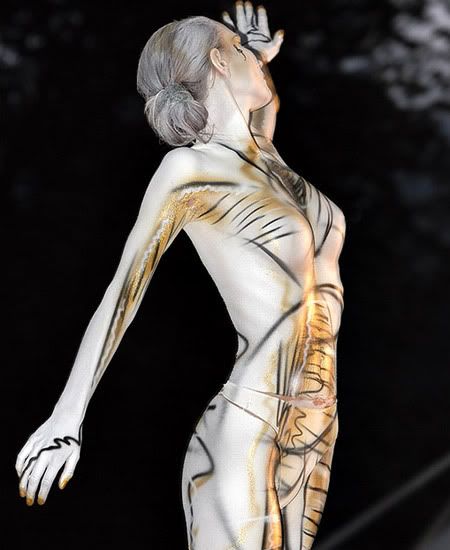
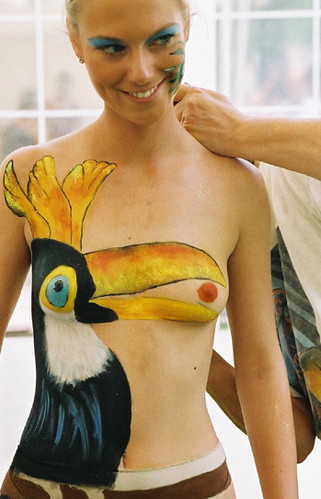
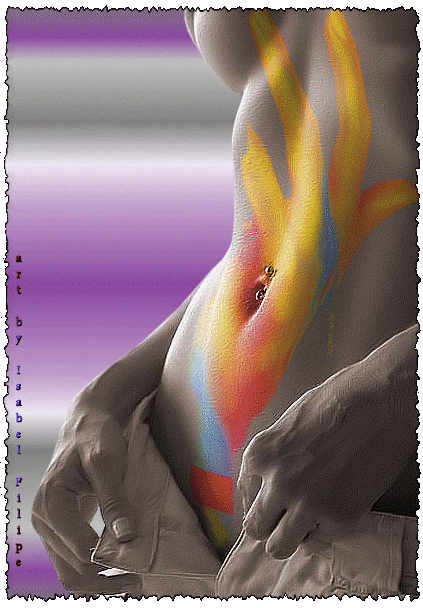
The winner Body Painting contest is being exhibit her body paint design. The combination of color and lines on the art of body paint design this girl is very good and is a brilliant idea.
 The year 2001 and subsequent years were controversial for the naked cyclists, including several references to cyclists as "parade crashers". In 2001, police and parade organizers posted signs noting the laws against indecent exposure to warn cyclists of possible prosecution. Organizers claimed that the cyclists were getting in the way of the event's true hallmark: artistic freedom.[1] An editorial that same day (May 17, 2001) in The Seattle Times echoed this sentiment: "They have stolen the spotlight on a parade that is supposed to be about art, not about being unclothed. The Fremonters resent that. They do not want the nudists doing this. But they do not want them wrestled to the pavement by police, spoiling the atmosphere of their parade."[2]
 Marina Abramovic performed ‘Rhythm O’ in 1974. In the piece, the audience was given instructions to use on Abramovic's body an array of 72 provided instruments of pain and pleasure, including knives, feathers, and a loaded pistol. Audience members cut her, pressed thorns into her belly, put lipstick on her, and removed her clothers. The performance ended after six hours when someone held the loaded gun up to Abramovic's head and a scuffle broke out.
 More extreme body art can involve things such as mutilation or pushing the body to its physical limits. For example, one of Marina Abramovic's works involved dancing until she collapsed from exhaustion, while one of Dennis Oppenheim's better-known works saw him lying in the sunlight with a book on his chest, until his skin, excluding that covered by the book, was badly sunburned. It can even consist of the arrangement and dissection of preserved bodies in an artistic fashion, as in the case of the plastinated bodies used in the travelling Body Worlds exhibit.


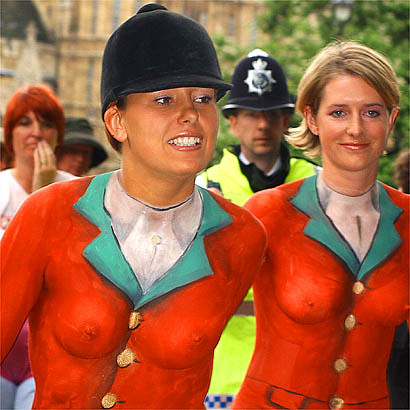 Nice Red Body Paint Fashion
 Nice Art Body Painting
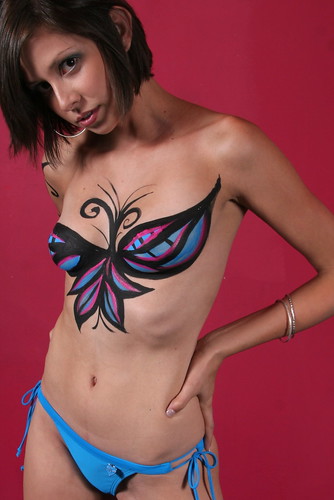 Butterfly Body Painting in Fashion Show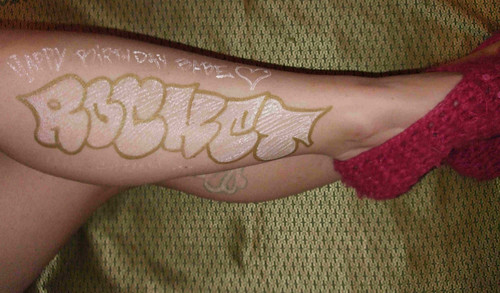

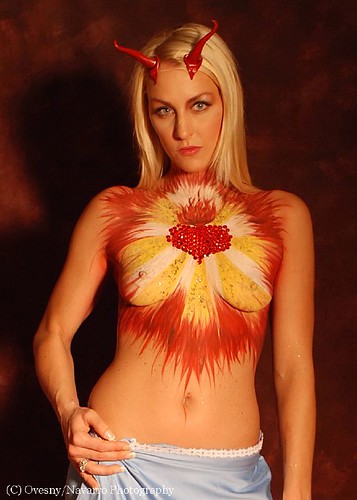

 Art Body Painting: Bicycle Sport Fashion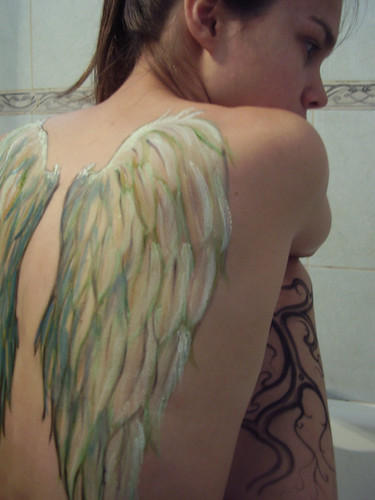
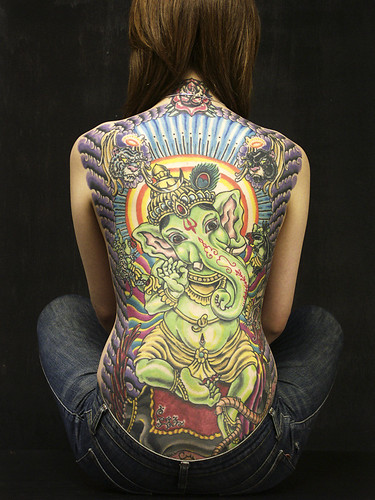



 Body Painting by Te Papa
 Flower body painting by mainland
 Body Painting Update in Photo Gallery


